Client:
Intuit, QuickBooks
Timeline:
6 weeks
Role:
Lead Designer / Design Manager
Skillsets:
Design leadership, UX strategy, systems design, user research, cross-functional delivery
Partner teams:
Product Development, CRO, SEO, Data, Shared Capabilities Engineering
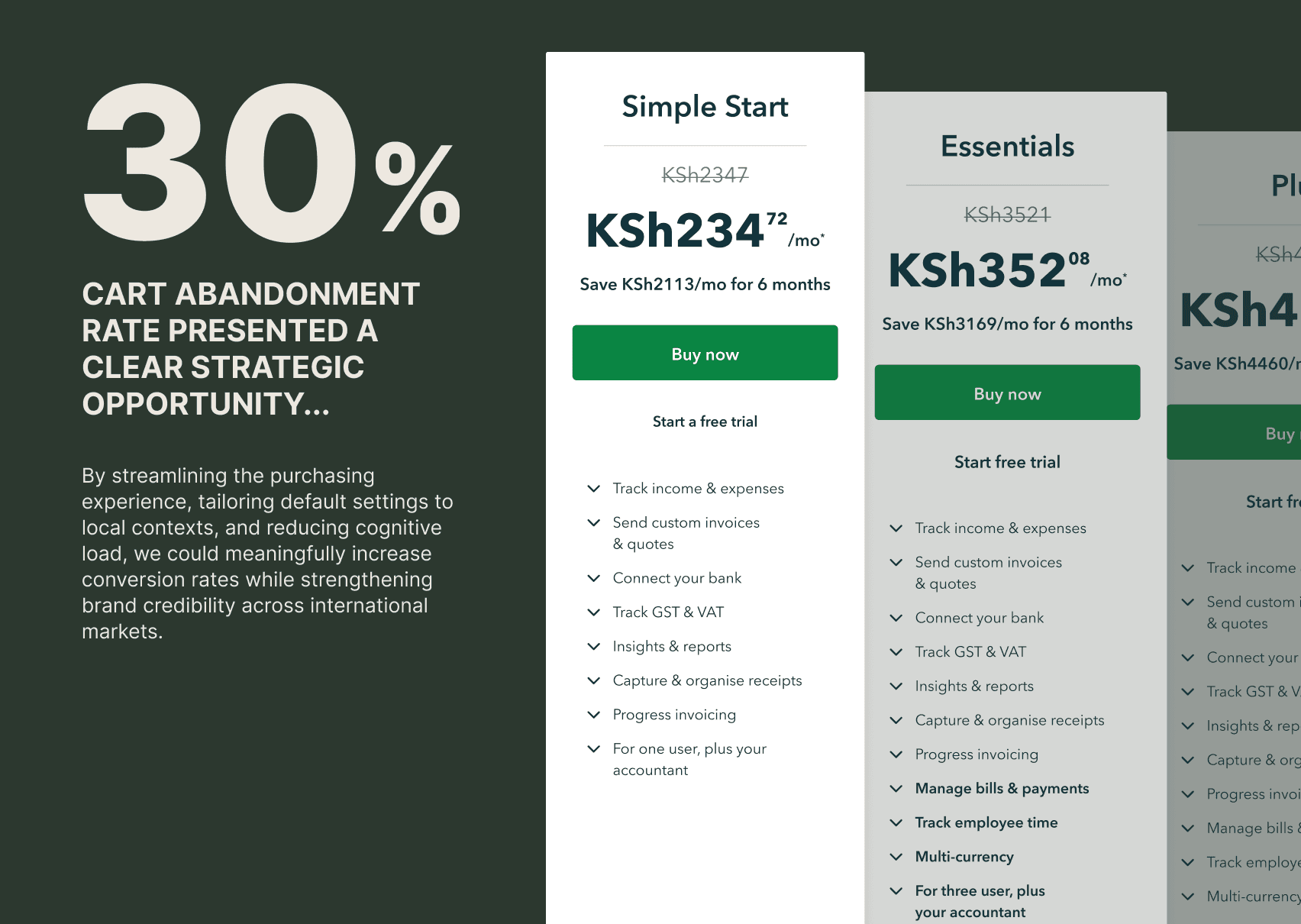
That's a significant leak, and for a global product operating across 200+ markets it compounded quickly. When we dug into the qualitative data, two things kept surfacing. First, the experience sent users from a marketing page to a separate hosted sign-up environment which was a jarring visual break that eroded the trust we'd just spent the whole page building. Second, international users were encountering pricing in currencies they didn't recognise, with taxes and payment terms that weren't clear until it was too late in the flow.
I led the design on this project as part of a three-person team.
One designer supported with exploration and research; the other joined primarily as a development opportunity - I brought them into the process deliberately, using the project as a coaching context while keeping delivery on track.
In practice that meant I was setting direction, reviewing and shaping the work of others, making the calls on what shipped, and ensuring every decision was grounded in both user need and business intent. I was in the room - and often running the room - for every meaningful decision this project involved.
The early phase wasn't about generating solutions. If anything, the challenge was the opposite, we had too many ideas we were excited about…
and subsequently, not enough clarity on which ones would actually move the needle in a measurable way. A significant part of my job in those first few weeks was keeping the team focused, managing scope creep, and pushing us toward a short list of changes we could ship, test, and learn from with confidence.
We landed on two priorities: give users confidence to proceed, and give them transparency on value. Everything else was either deferred or folded into one of those two buckets.
A few decisions shaped the final direction more than any others.
The final system supported 11 languages and 7 currencies within a single codebase - designed to be extended by engineering without requiring design involvement every time a new market needed to be added.
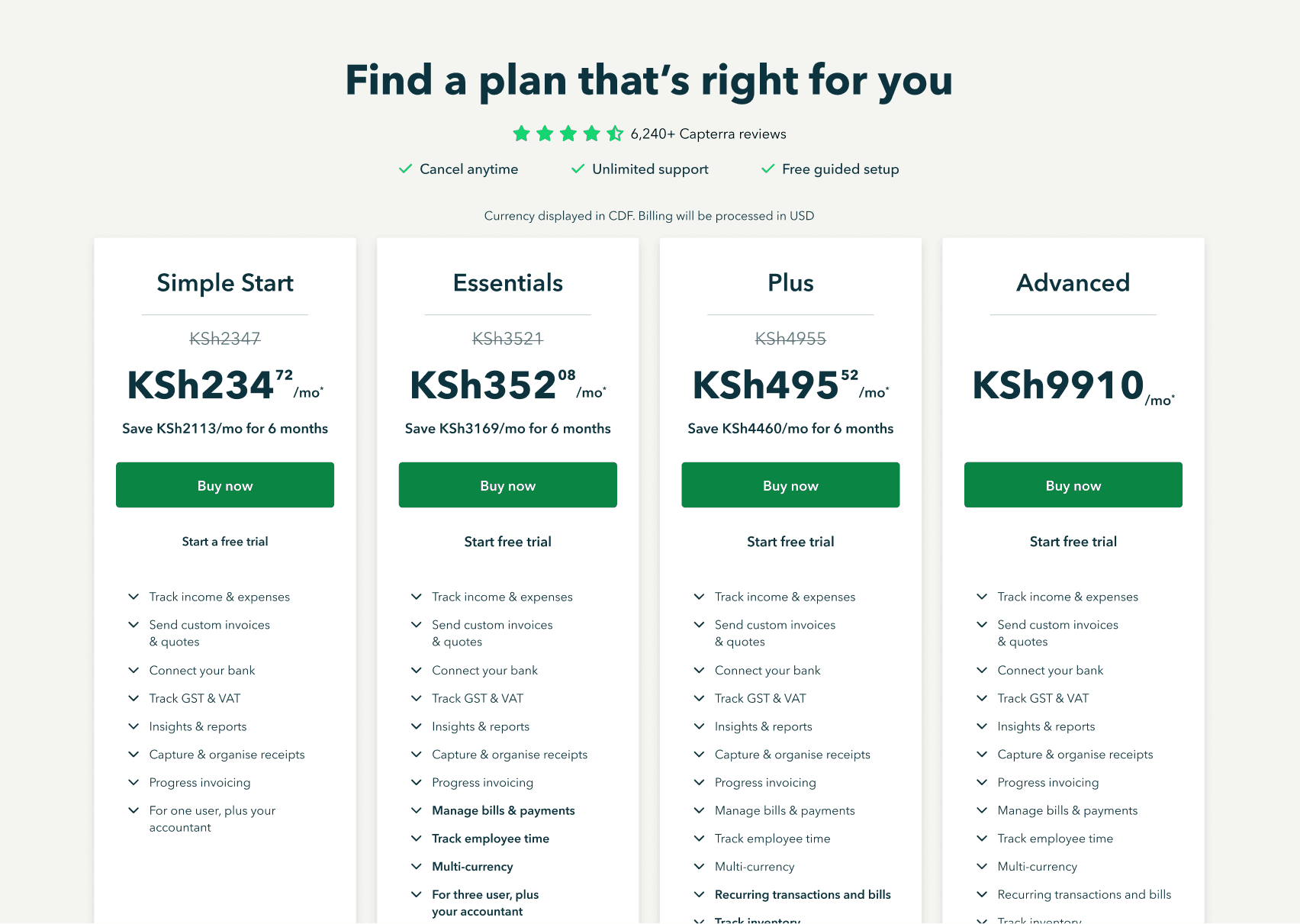
The starting point: localised pricing displayed, but within an experience that still carried the friction of a disconnected sign-up flow.
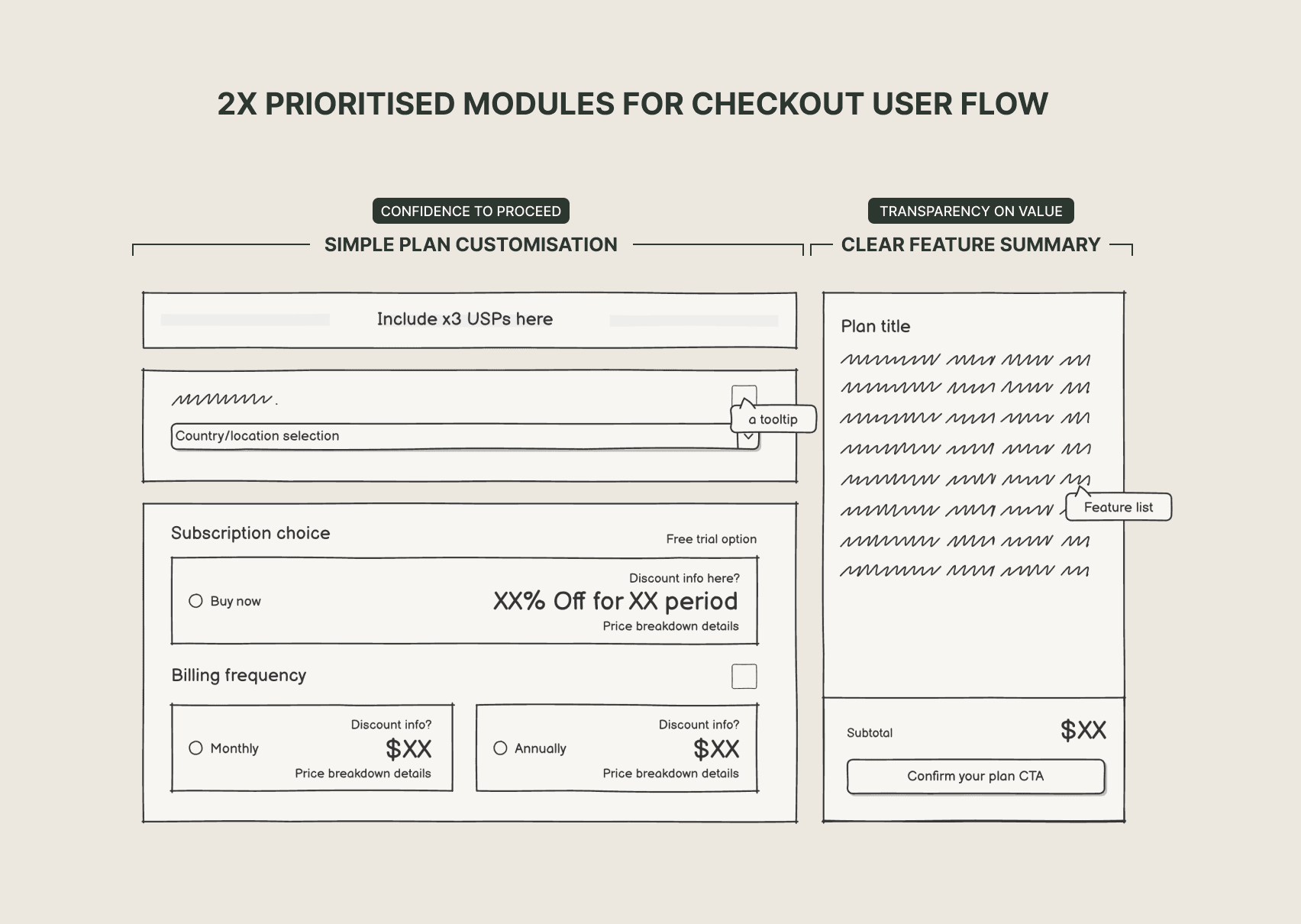
Early in the process we narrowed the solution space to two modules: simple plan customisation and a clear feature summary. This framing kept the team aligned and gave engineering a clear scope to work within.
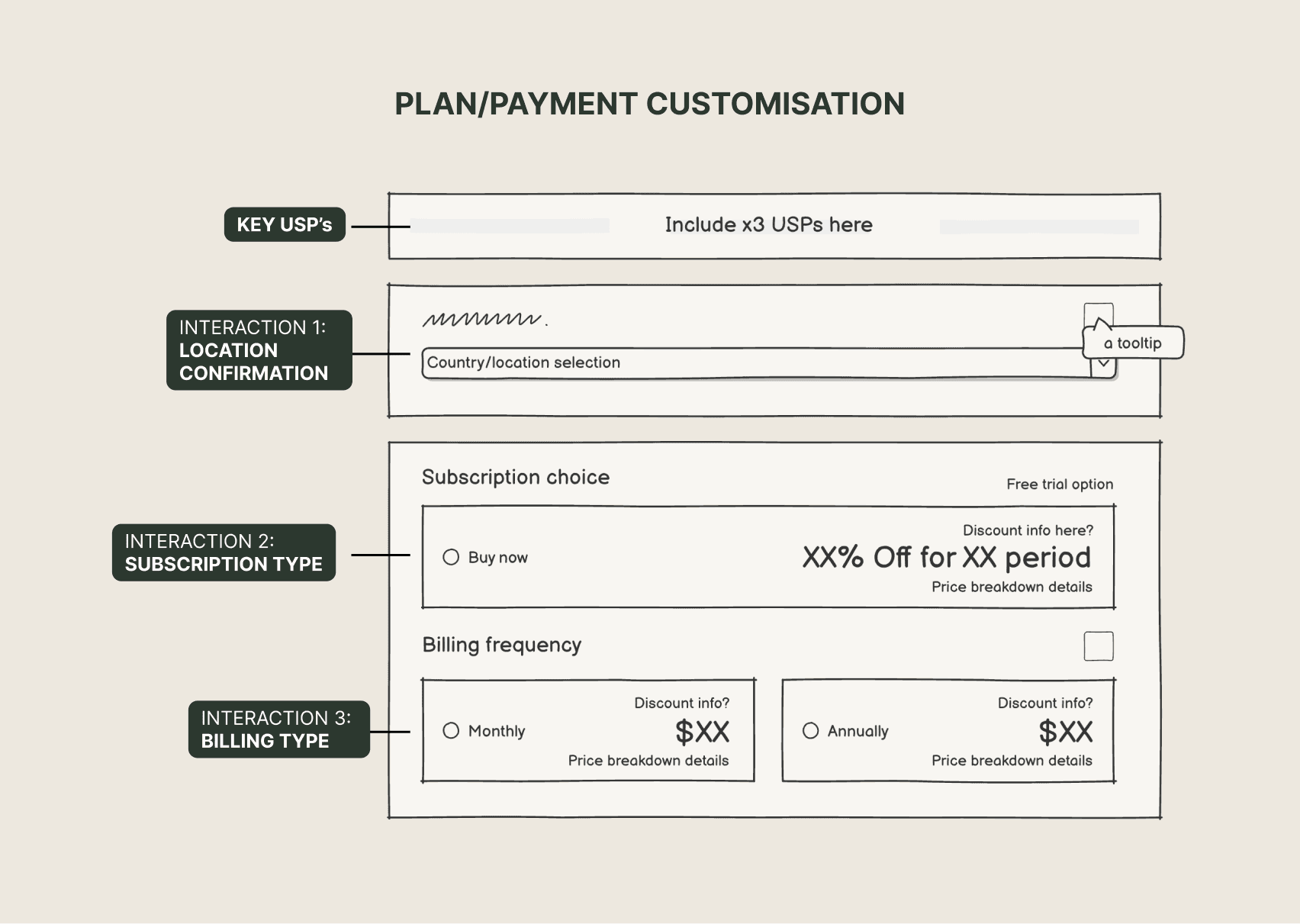
The redesigned pricing page with local currency defaulted via IP detection, and the plan summary screen showing transparent feature lists and pricing at a glance.
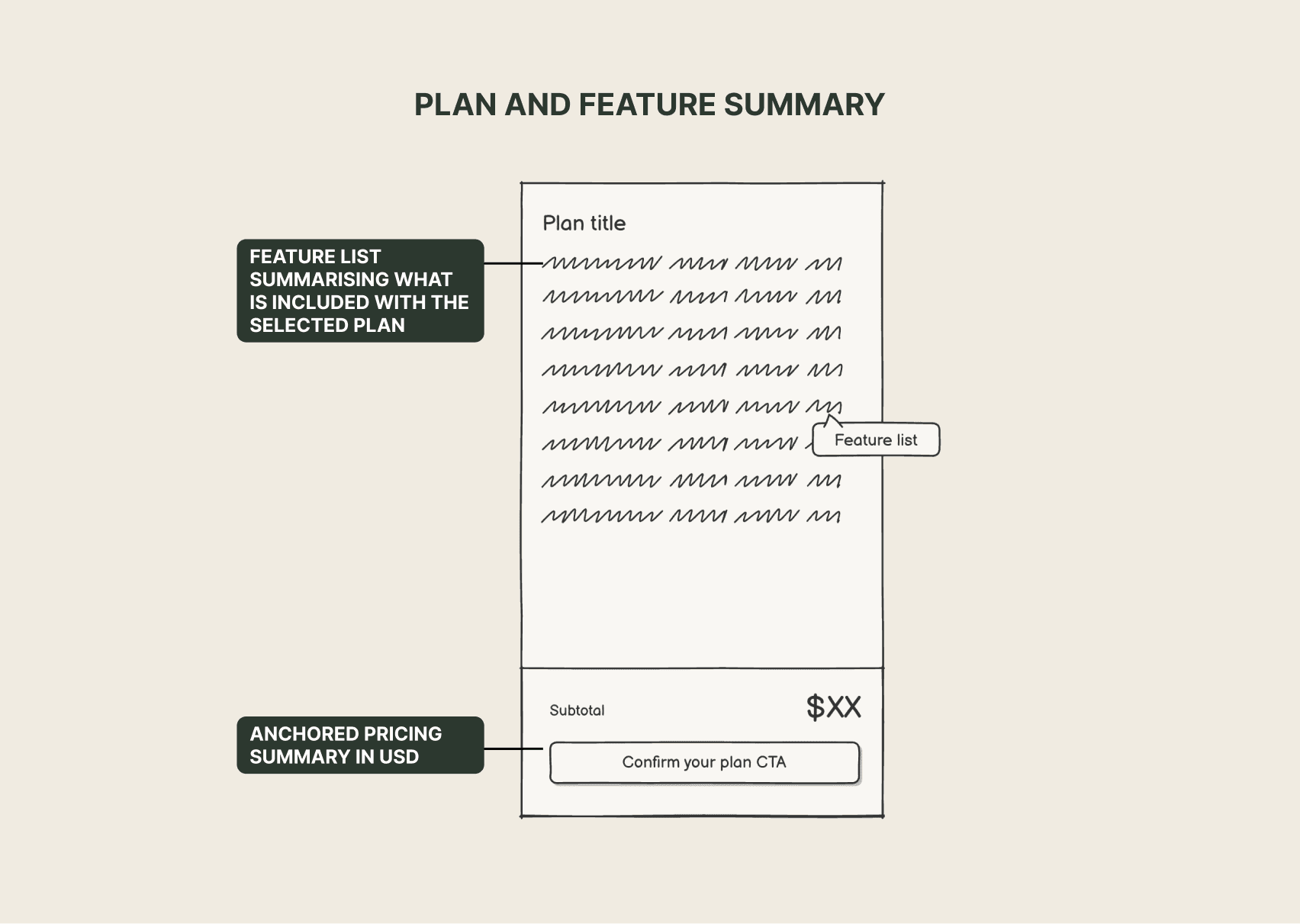
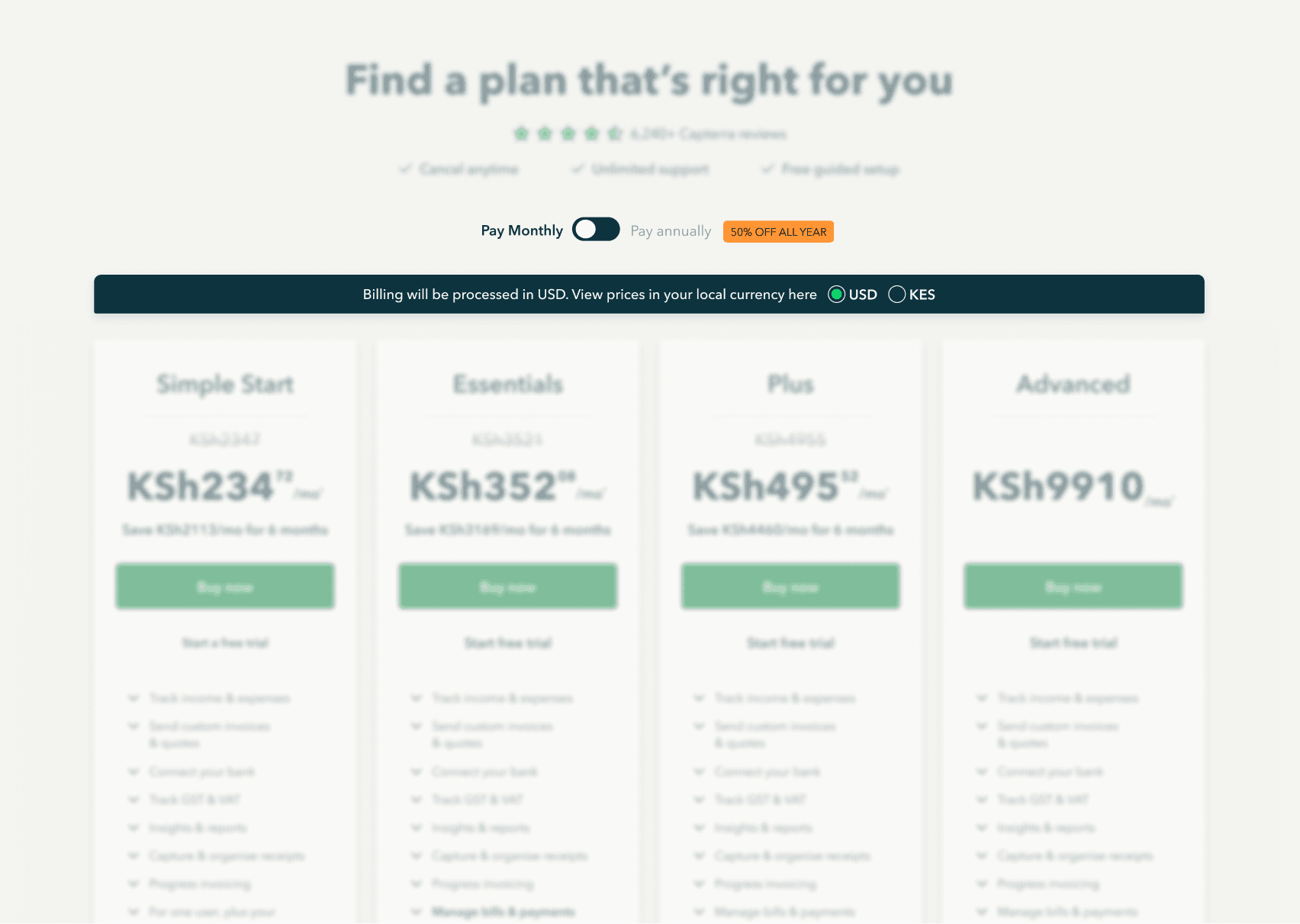
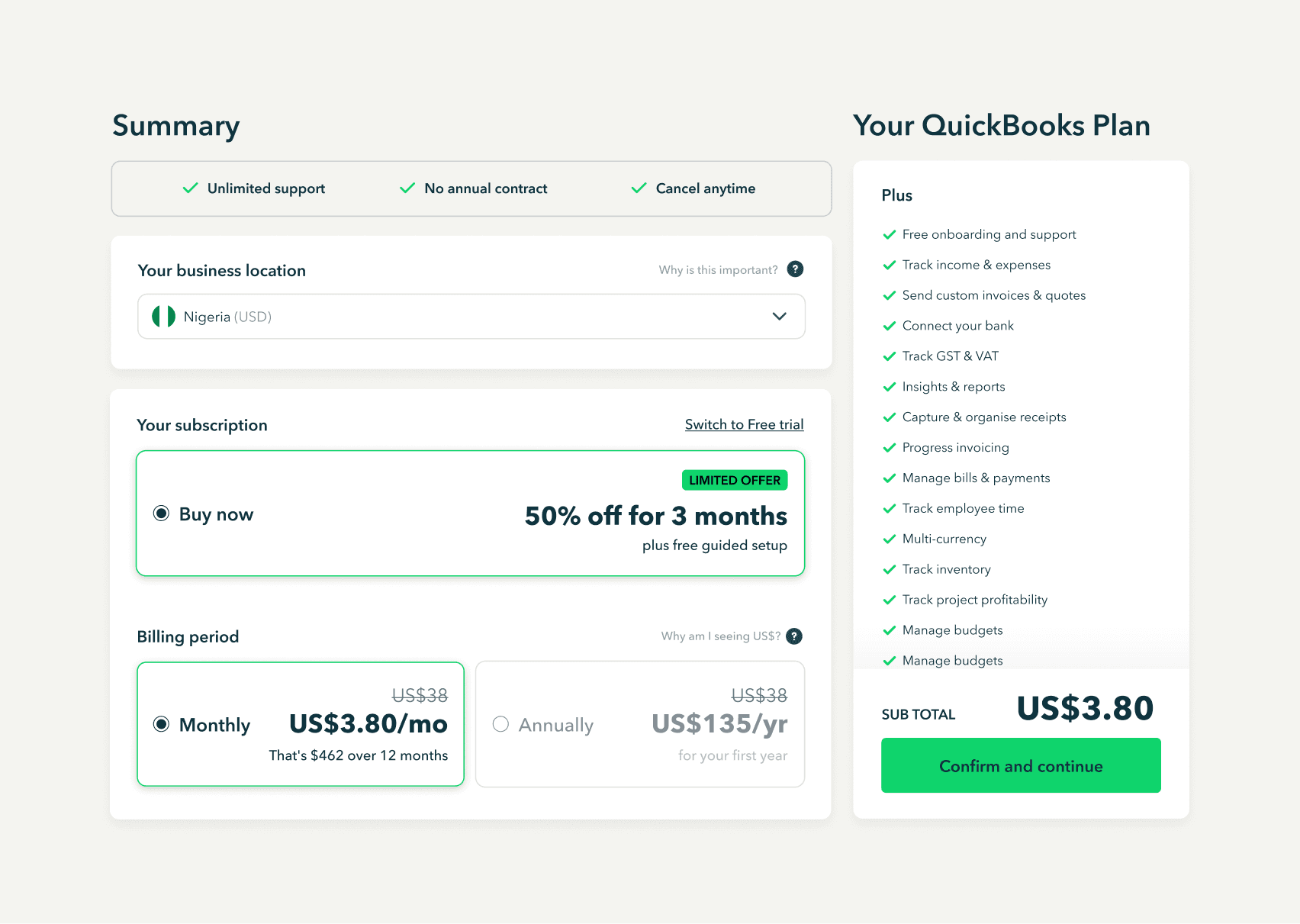
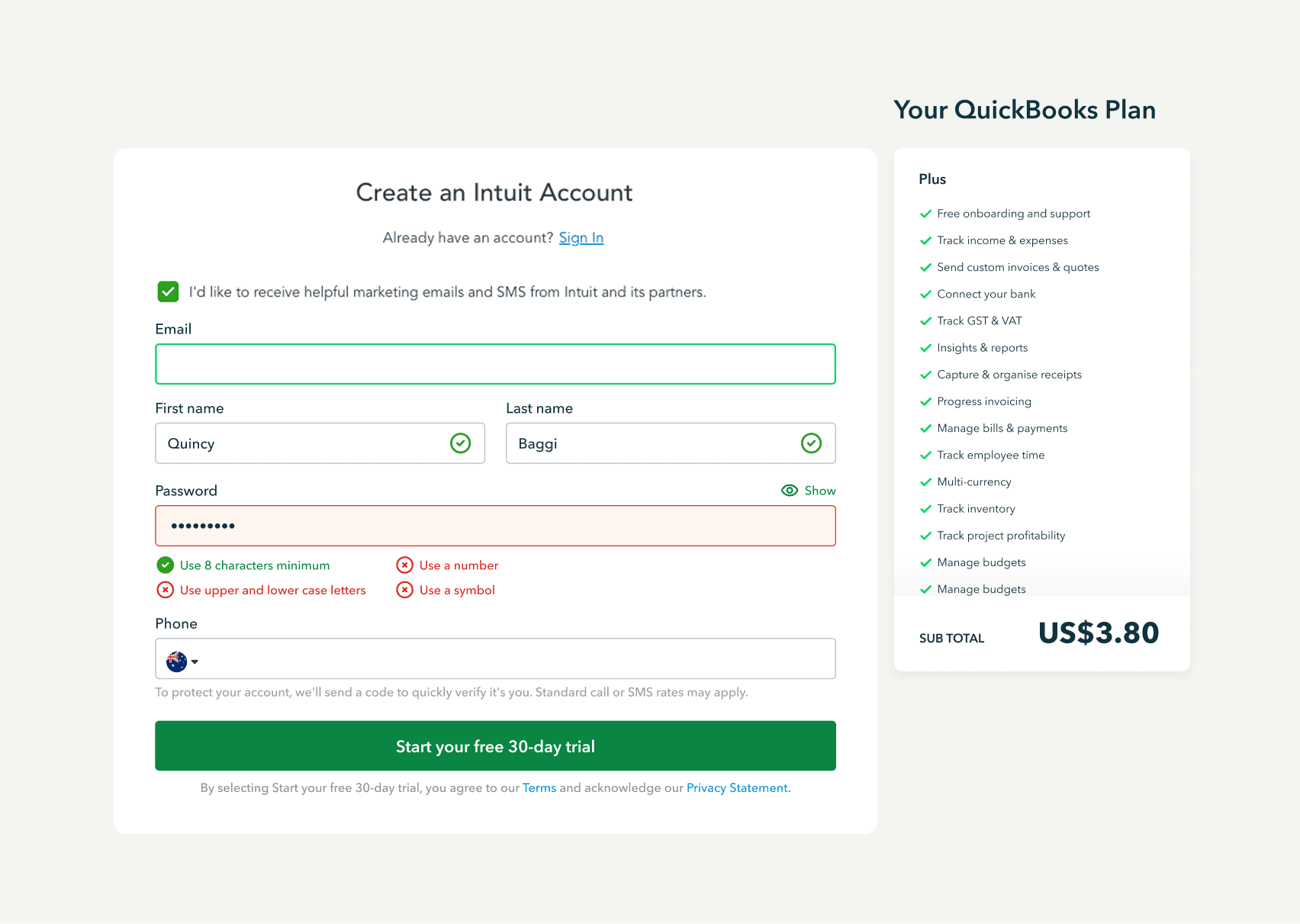
The plan summary persists through account creation, keeping users anchored to their choice and reinforcing the value of what they're signing up for.
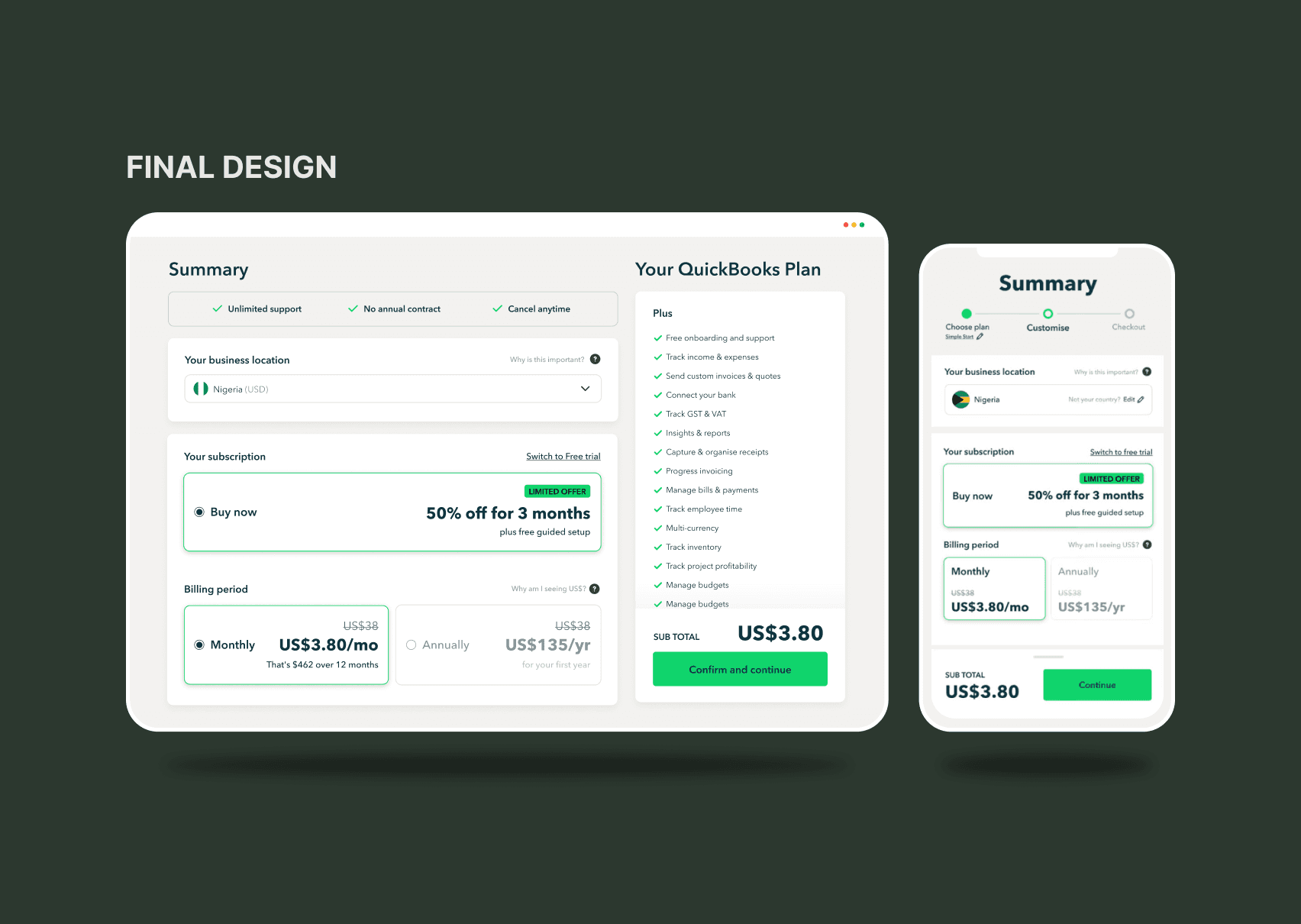
The final experience across desktop and mobile - a clean, consistent, globally-scalable sign-up journey built to extend without accumulating design or engineering debt.

When the data team shared the results, the reaction in the room was genuine disbelief
not because we didn't expect improvement, but because the scale of it was unlike anything people with ten-plus years at Intuit had seen on a single project. I put together a deck and shared it in our global design Slack channel - not just to celebrate the win, but because results like these are most valuable when other teams can learn from them and replicate the approach in their own markets.